
Moving Beyond the Baseline with Tools Release 9.2.8
Oracle’s extension of Premier Support for EnterpriseOne 9.2 through at least 2034 has fundamentally changed the ERP lifecycle. JDE Tools Release 9.2.8 introduces new features and UDO performance improvements that shift the focus from high-risk platform migrations to predictable, incremental updates. These updates typically reduce regression testing cycles by around a third compared to the 9.1 era.
The mandatory transition to 64-bit architecture, which was the primary hurdle in the 9.2.5 release, is now a mature, stable reality in 9.2.8. We have moved past the 2GB memory address limitation of the 32-bit era, which directly impacts how the enterprise server handles large-scale BSFN execution. In environments running heavy customization or complex distribution logic, this provides a noticeable lift in stability for UBEs that previously struggled with memory-intensive call stacks during peak processing windows.
Adopting 9.2.8 is a necessary step to clear technical debt before it becomes a bottleneck. Organizations remaining on older 9.2.x point releases often find themselves trapped in a cycle of applying one-off ESUs that break compatibility with older Tools components. By standardizing on 9.2.8, you align your infrastructure with Oracle’s long-term roadmap, ensuring that your JDE instance remains a viable asset through 2034.
UDO Performance Improvements and Management at Scale
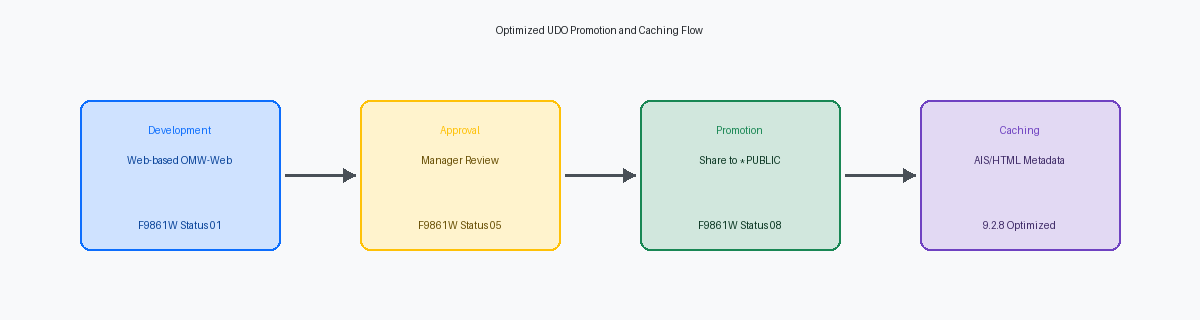
Latency in the HTML server often traces back to how JDE fetches metadata for Orchestrations and Form Extensions. In environments with over 1,000 active UDOs, the constant polling of the F9861W1 table creates a bottleneck that users perceive as UI stutter during initial application loads. Tools Release 9.2.8 addresses this with optimized caching mechanisms that reduce database round-trips for metadata retrieval.
Hardening the Edge with Enhanced Security Features
Security in JDE has historically required complex third-party reverse proxies and manual configuration of identity providers. Tools Release 9.2.8 changes the architecture by extending native support for OAuth 2.0 and SAML 2.0 directly within the application stack. This native integration removes the overhead of maintaining middle-tier hardware specifically for Multi-Factor Authentication (MFA) and single sign-on (SSO) workflows.
Logic Extensibility and Orchestrator Evolution
For years, complex data manipulation meant opening Visual Studio and writing C-code Business Functions (BSFNs) that required a full package build to deploy. Tools Release 9.2.8 shifts this paradigm by introducing advanced array processing and string manipulation directly within Logic Extensions (LEX). You can now handle multi-level JSON arrays or parse delimited strings without compiling a single line of code. This capability effectively deprecates the need for custom C-code in many common integration scenarios.
Modern UI Capabilities and Workflow Studio
The requirement to use a Windows development client to modify a simple credit limit approval route is no longer a constraint. Tools Release 9.2.8 completes the transition of Workflow Studio to a fully web-based interface, removing the last dependency on the OMW fat client for process modeling. This represents a fundamental shift in how organizations manage the lifecycle of business process automation without specialized developer workstations.
Performance Tuning the 9.2.8 Tech Stack
The move to 64-bit kernels in Tools Release 9.2.8 removes the 4GB memory address limit per process. For years, heavy financial consolidations or inventory reconciliations running on 32-bit architecture would frequently hit that hard ceiling, triggering “Out of Memory” errors that crashed the kernel. With the 64-bit architecture, these processes can scale to the limits of the physical hardware, providing stability for high-volume batch processing.
Economic and Operational Impact of Staying Current
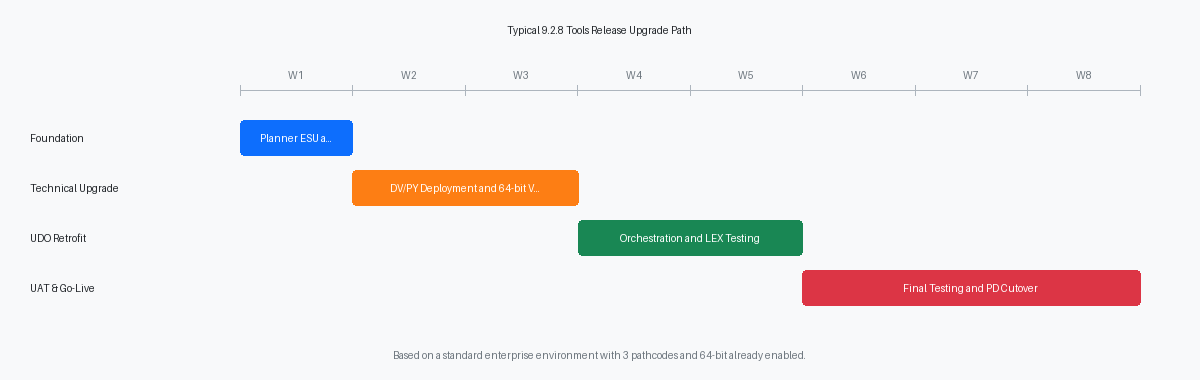
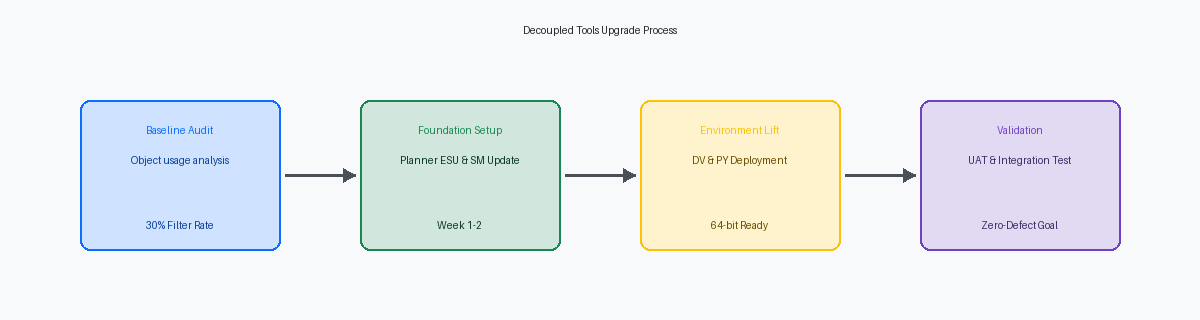
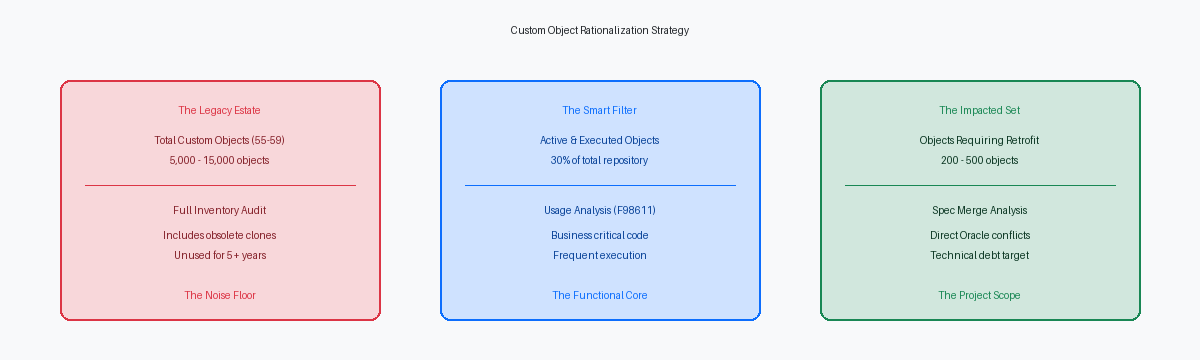
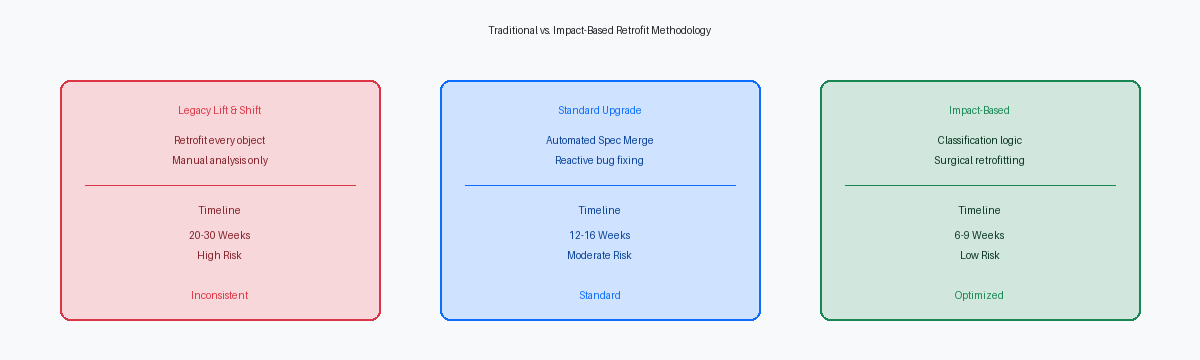
Executing a Tools Release upgrade to 9.2.8 typically consumes 15-20% of the budget required for a full application upgrade, yet it yields the vast majority of immediate performance and stability gains. This ROI makes technical debt an expensive choice for leadership who defer updates until a crisis occurs. By decoupling the technical foundation from the application layer, teams can stabilize the kernel and AIS layers without the heavy lifting of a full-scale retrofitting exercise. Staying current ensures that the pipeline for Application Updates remains functional, preventing “dependency hell” where a routine patch becomes a multi-week troubleshooting project.